
Cabin diagnostics / NZ traveller guide

Cabin Comparisons

Ocean Itinerary helps New Zealand travellers compare cruise cabins as practical onboard living systems, not just category names. Use this guide to weigh layout, location, light, storage, bathroom rhythm, noise and movement alongside the time you expect to spend in the room. Inside, ocean-view, balcony and suite labels can mean different things on different ships, so treat deck plans and current category descriptions as the final evidence.

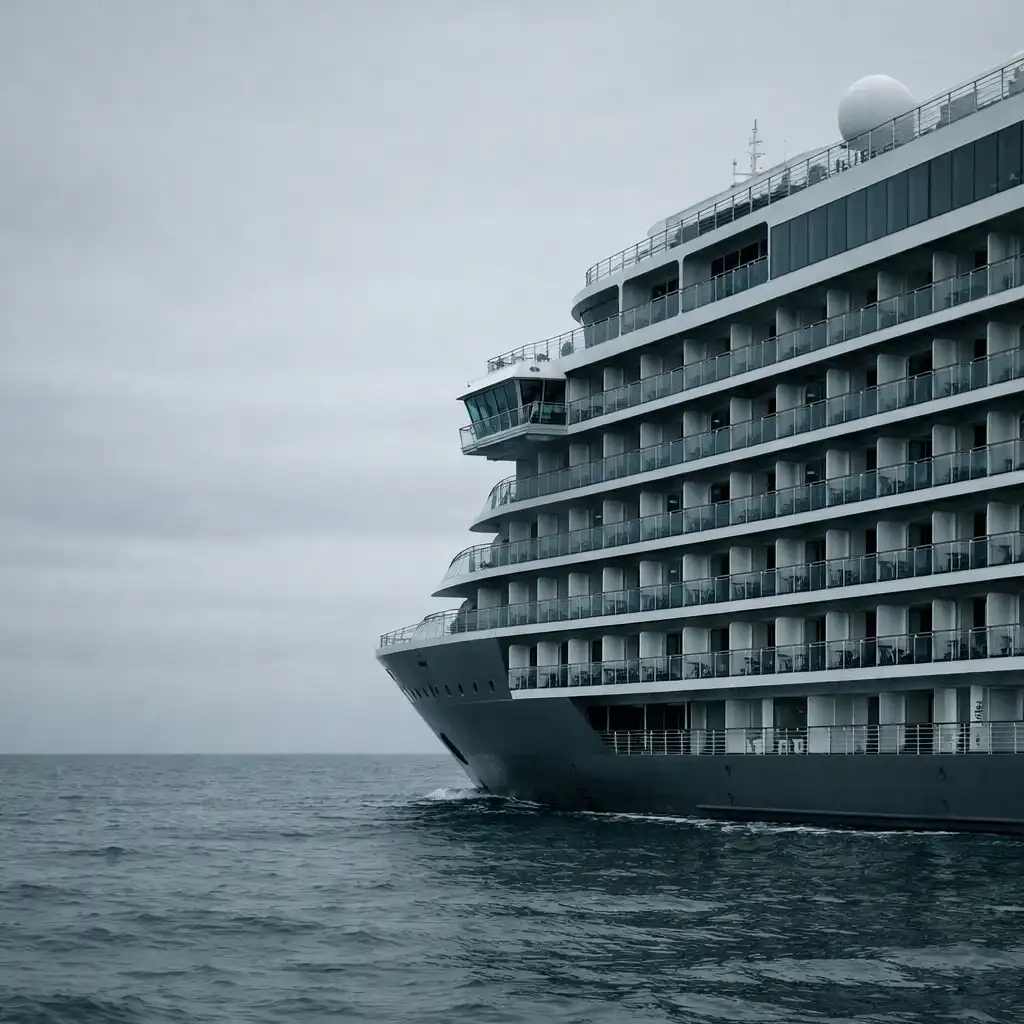
Rows of private balcony cabins along the side of a modern cruise ship
Specimen view: balcony rows show ship context, not a universal cabin arrangement.
SpaceUsable circulation, not only area.
SleepBed and berth arrangement.
LightWindow, curtain and exposure.
StorageDaily unpacking workflow.
PositionNoise, routes and motion context.

Category signal matrix

Compare the category before the cabin number

These are typical category families, not universal specifications. A useful comparison starts with the conditions a label often signals, then checks the exact ship, deck and cabin description.

Specimen 01 / interior

Inside cabin

Natural light AbsentSleep setting DarkerCheck first Storage + noise

Inside cabins are windowless spaces that can suit travellers who expect to spend much of the day around the ship or prefer a darker sleeping environment. The central trade-off is the absence of natural light. Check the actual bed layout, storage access and what sits near the cabin on the deck plan; layouts and category names vary by ship.

Check ship plan
Specimen 02 / exterior

Ocean-view cabin

Daylight PossibleView type VerifyCheck first Window context

An exterior view can add daylight and a stronger sense of orientation, but the window’s form and position can differ substantially. A porthole, picture window or obstructed view may be described differently in ship documentation. Inspect whether the stated view is fixed, partial or blocked, and compare the cabin position with the relevant deck information.

Check ship plan

Specimen 03 / exterior access

Balcony cabin

Outdoor access PrivateUse pattern VariableCheck first Exposure

Balcony cabins add private outdoor access, while their usable value depends on weather, itinerary, balcony depth and exposure. Keep the interior layout separate from the outdoor space when comparing options. Ask whether wind, shade, overlooked areas, machinery-adjacent positions or nearby outdoor activity are shown on the plan; balcony configuration varies by vessel.

Check ship plan

Specimen 04 / divided zones

Suite category

Zone separation PossibleInclusions VerifyCheck first Plan + terms

Suite is a broad category that may offer more separation between living and sleeping zones, but space alone does not guarantee particular inclusions. Verify the bathroom arrangement, seating, access features and category-specific terms on the named ship. Suite layouts and inclusions can vary widely between cruise lines and even between categories on one vessel.

Check ship plan

Operational inspection

The cabin diagnostic fields

Field 01 / circulation

Sleep and circulation

Bed arrangement, bedside clearance, sofa-bed deployment and the route to the bathroom can matter more than a broad capacity label. Compare sleeping capacity with usable daytime circulation, especially when additional berths are involved. Twin-to-double conversion and extra bedding should be verified in category details, because images may not show every furniture configuration.

Field 02 / unpacking

Storage and unpacking workflow

Wardrobe doors clear the routeDrawers and shelves are shared realisticallyLuggage has a planned resting place

Storage is a daily-use question: consider wardrobe access, drawers, shelves, luggage placement and how many people will share them. Open cases can reduce floor circulation quickly. For longer sailings or shared cabins, seek layout plans and guest photos where available, while remembering storage capacity differs by cabin layout.

Field 03 / shared rhythm

Verify configuration

Bathroom and getting-ready rhythm

Bathroom layout, shower entry, vanity space and mirror placement shape how easily couples, families and multigenerational groups can share a cabin. Where access matters, confirm relevant bathroom features in current ship material rather than inferring them from photographs. Do not assume a bath, separate toilet, walk-in shower or any particular fixture; configuration varies by ship and category.

Field note / light and privacy

Light, privacy and room feel

Daylight, window placement, balcony exposure, curtain control and sightlines can change the feel of the same category. An exterior cabin may still have a limited or obstructed view, while privacy can depend on balcony geometry and adjacent decks. Consider these as balanced conditions to inspect, not fixed indicators of comfort.

Traveller-fit profiles

Who the cabin needs to work for

There is no universal best category. Match the cabin’s documented conditions to the people using it, their routines and the itinerary context.

Profile 01

Solo traveller

efficient spacelocation comfortdaylight preference

For a solo traveller, efficient use of space, bed configuration, location comfort and daylight preference may matter more than group capacity. Weigh expected cabin time against time in public spaces, then check any single-occupancy category wording where relevant. Single-occupancy availability and category definitions vary by ship, so do not assume a broad label describes the exact layout.

Profile 02

Couples

bed layoutshared storagebathroom rhythmoutdoor access

Couples can compare bed arrangement, bathroom rhythm and shared storage before deciding how much privacy or outdoor access they want. A balcony may carry a different value on a short sailing than on a scenic itinerary. Check that the room leaves usable circulation around the bed, because cabin configuration and balcony value vary by ship and itinerary.

Profile 03 / group layout

Verify berth plan

Families and mixed-age groups

berth layoutdaytime floor spacebathroom timingfacility routes

Families and mixed-age groups benefit from checking berth layout, daytime floor space, bathroom timing, proximity to family facilities and clear emergency-route awareness. Verify age policies, connecting-room availability and exact sleeping arrangements in ship information. Extra berths can alter how a room works during the day, and no category should be treated as family-friendly by default.

Profile 04 / current confirmation

Mobility, sensory and access needs

doorway contextbathroom layoutroute distancenoise context

Access planning is a ship-specific review of doorway clearance, bathroom configuration, route distance, lift reliance and nearby noise conditions. Seek current operator documentation for requirements relevant to your travel party; accessible categories and features should never be inferred from photographs. Availability and cabin details must be confirmed ship by ship.

Verify relevant features with current operator material.

Deck position / exposure map

Location is part of the cabin

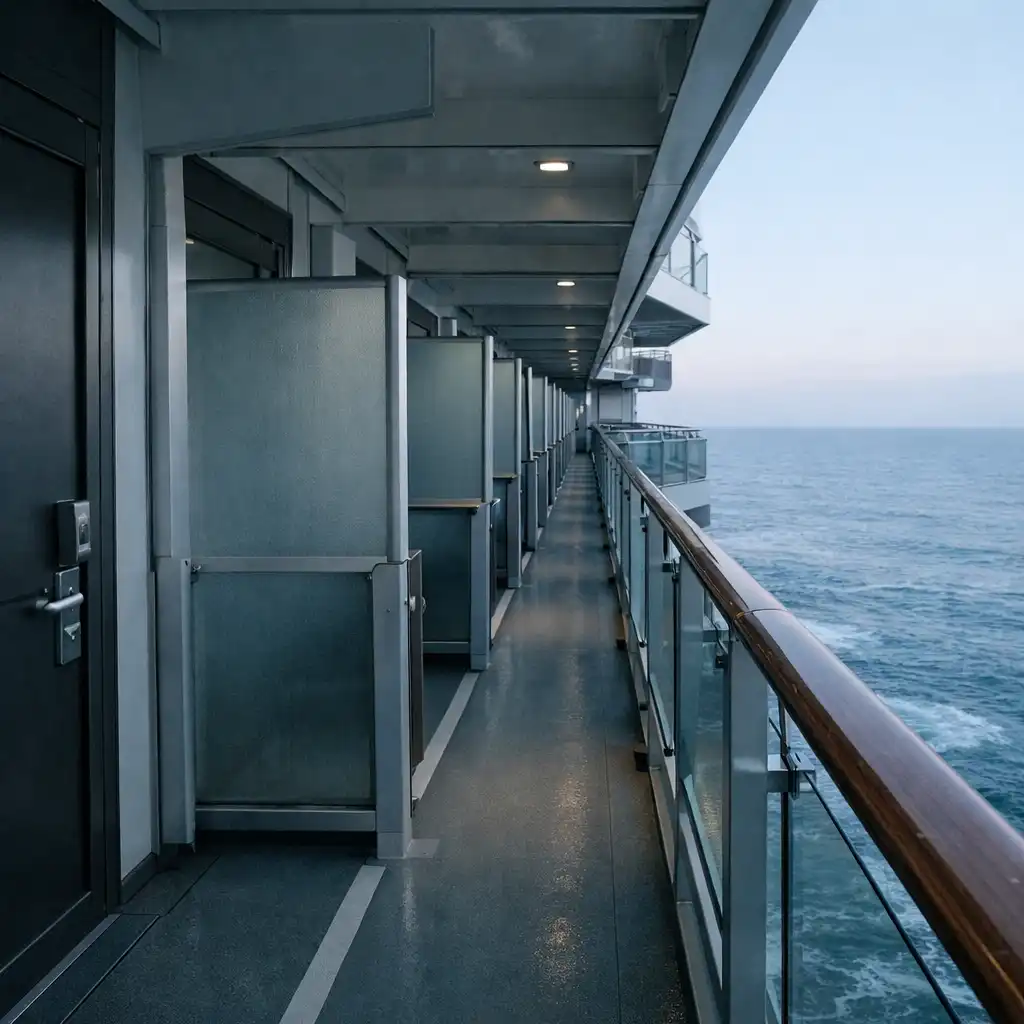
Cruise ship balcony deck with repeating railings and open sea beyond
Location specimen: balcony lines, adjoining decks and exterior exposure require ship-specific reading.

Position signal

Forward, midship and aft

Cabin position influences walking routes and can affect perceived motion, while individual experience varies with sea conditions and vessel design. Midship placement can be a comparison consideration, not a guarantee of comfort. Travellers sensitive to movement can compare location with ship-specific guidance and their own priorities, without treating any position as universally stable.

Caution: perceived motion is individual and condition-dependent.

Adjacency

Above, below and beside

AboveSame deckBelow

Inspect the deck immediately above and below, not only the cabin’s own deck. Public spaces, service areas, lifts, theatres, dining rooms, pools and crew zones are context to investigate. Plans show useful context, but may not reveal every operational sound.

Route line

Lift access and walking distance

Proximity can balance easier navigation against possible corridor traffic or elevator noise. Map likely routes to dining, theatre, pool, medical or muster areas on the specific ship. Deck layouts differ, and venue use can change across sailings.

Exterior context

Check exterior context

Balcony exposure and exterior activity

Wind, shade, overlooking decks, lifeboat positioning, sea spray and activity on nearby outdoor areas can shape a balcony experience. Inspect elevation views and deck-plan notes where supplied. Exterior privacy and interior quiet are separate questions, and conditions vary by location, design, weather and itinerary.

Reading method

Map before assuming

Use the cabin number as a map reference. Compare nearby lifts, stairways, public rooms and open areas with your own preferred daily route rather than relying on a location label alone.

Inspection protocol

Read the deck plan like an evidence sheet

Use the listing and plan together. Each check narrows uncertainty without interpreting terms beyond the ship’s own documentation.

  1. 01

    Confirm the exact category code

    Distinguish a broad marketing category from the exact code, deck and cabin assignment language used for the particular ship. Similar labels can cover different positions or layouts. Note whether a selection is guaranteed, assigned or changeable only when that information is explicitly supplied.

  2. 02

    Inspect the deck above and below

    Identify what sits directly adjacent to the cabin vertically, then compare it with public and service zones. Pools, theatres, dining, service spaces and open decks are examples to investigate, not presumed sources of disturbance. Plans are one useful input among several.

  3. 03

    Verify bed and berth layout

    Confirm the sleeping arrangement, additional berths and day-use furniture rather than relying only on capacity numbers. A room sleeping more people can have a different daytime footprint. Read plan symbols and written cabin descriptions together; bed and berth layouts vary by category and ship.

  4. 04
    Read notes

    Read view and obstruction notes literally

    Give attention to terms describing partial views, obstructions, restricted access or balcony conditions. Read wording in the operator’s specific context and compare the relevant deck position with exterior imagery where available. Do not infer a meaning from an undefined label.

  5. 05

    Map the daily route

    Picture likely routes to dining, lifts, pool areas, entertainment and muster information based on your priorities. This can uncover walking-distance and traffic trade-offs. Schedules and venue use can change across sailings, so use the route as a planning prompt rather than a fixed operational promise.

Personal comparison worksheet

Make a short list with consistent checks

This is a reading tool, not a recommendation engine. Keep documented facts separate from preferences and assumptions.

Set your non-negotiables

  • Natural light or a balcony
  • Accessible configuration
  • Specific sleep layout
  • Location or route priority

Choose the conditions that matter most to your party, then verify each one in the ship’s own information. The list should be traveller-led: a non-negotiable for one sailing may be optional on another.

Rank the trade-offs

Compare competing conditions in full language rather than trying to create one generic score. Itinerary, season and travel party can change the balance.

Contrast AView versus deck location

Ask which condition supports your likely cabin time and routes.

Contrast BOutdoor space versus exposure

Check exterior context before assuming a balcony’s use pattern.

Contrast CLift proximity versus corridor traffic

Map access alongside possible activity on the same deck.

Contrast DCapacity versus daytime circulation

Read berth information with furniture and movement space.

Evidence discipline

Record what remains unconfirmed

When plan symbols, photographs or category wording leave uncertainty, separate documented facts from assumptions. Note questions for the operator or travel adviser and recheck current ship-specific material, because cabin information can change.

Unconfirmed is not equivalent to included.

Research route

Continue with the ship and the sailing context

Check the vessel as a whole

A cabin decision improves when you also understand dining, deck infrastructure, entertainment, wellness and family facilities on the specific ship. These systems shape daily routes and how much time you may choose to spend in the cabin.

Read Ocean Itinerary ship reviews

Read route and onboard notes

Itinerary rhythm, port days and onboard notes can affect how much daylight, balcony time or quiet cabin time you expect. Conditions vary by sailing and itinerary, so use route context as supporting research rather than a prediction.

Explore routes and onboard notes

Reference answers

Cabin comparison FAQ

These answers remain conditional because the exact ship and category documentation is the deciding evidence.

Is an inside cabin always the smallest option?

No. Category labels do not reliably describe every dimension or layout. Position, occupancy layout and furnishings can change the usable feel of a cabin. Inspect the specific ship’s plan and category description rather than using the inside label as a numerical size claim.

Does an ocean view guarantee an unobstructed view?

No. View type and obstruction conditions need to be read in the exact category and deck context. Window form and exterior structures can vary, so use operator wording and deck-plan evidence to understand the particular cabin position.

Is midship always best for motion concerns?

No. Position is one consideration among sea conditions, vessel design and individual experience. Compare the location with your own travel priorities and ship-specific guidance, without treating any cabin area as a guarantee about perceived motion.

How can I judge possible cabin noise?

Examine the decks above, below and beside the cabin, then note nearby public spaces, open decks and service areas. This offers useful context, but deck plans do not show every operational condition, so keep noise expectations conditional.

What should I verify for an accessible cabin?

Current ship-specific confirmation required.

Rely on current operator documentation for relevant accessible features and category availability. Consider doorway, bathroom and route needs without assuming standards, and do not treat photographs as sufficient confirmation of the configuration you require.

Final verification note

Compare the category, then confirm the cabin context

Use category comparisons to narrow options, then verify the exact ship, deck, layout and current terms through ship-specific material. Listed layouts, views, access conditions and onboard operations can vary. Continue your research with the vessel record and route context; Ocean Itinerary does not confirm a booking or replace current operator information.