Field note / orientation · repeat-use test
First-hour orientation
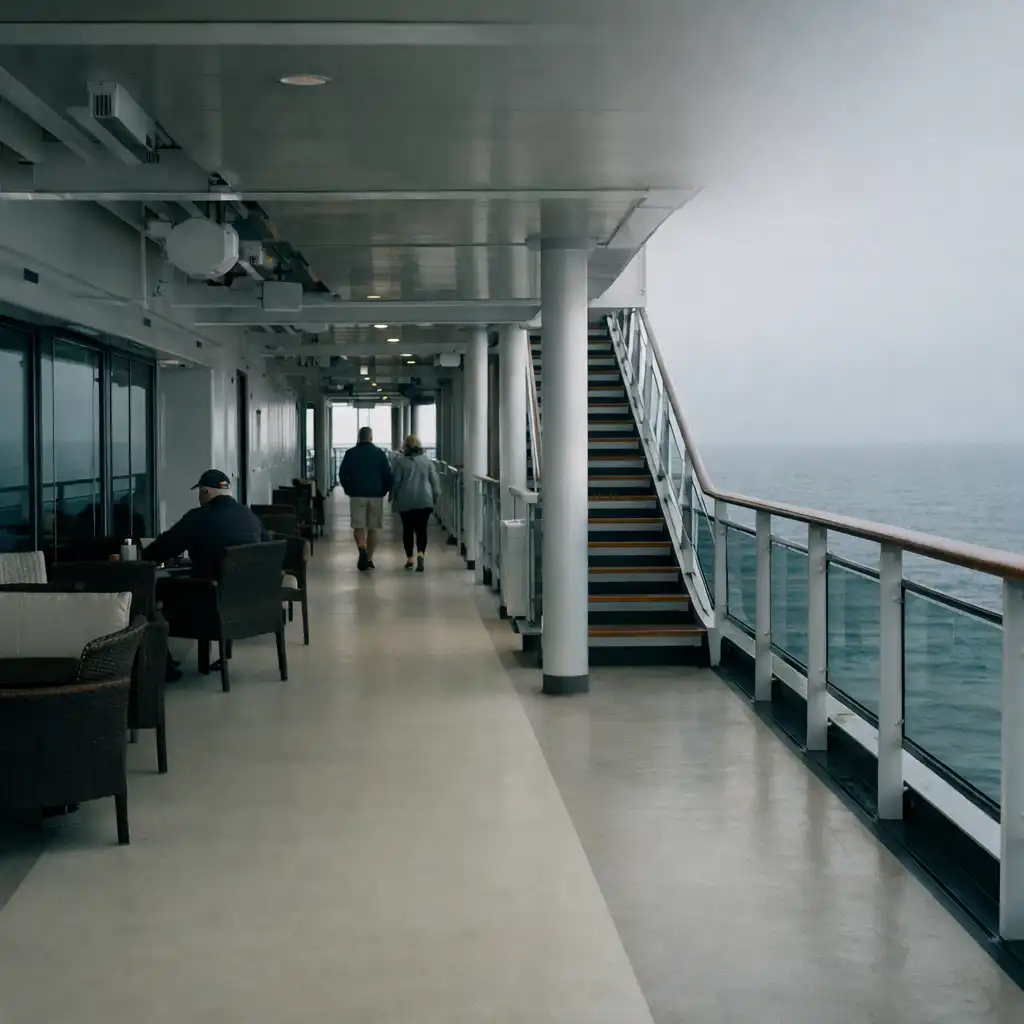
Arrival is assessed through the clarity of movement from embarkation-facing areas into the ship’s social, service and accommodation routes. A record looks at signage, vertical circulation and the relationship between entry zones and core public decks. First impressions are useful only when tested against the routes people repeat through the day, rather than treated as a complete judgement.
Route sequence
Public-deck connectivity
DINING → LOUNGES → POOL-ADJACENT AREAS → THEATRE APPROACH → QUIET SEATING
Reviews trace whether these paths are direct, intuitive and sheltered where relevant. Weather, programming and passenger density can alter how a route feels, so the physical connection is documented separately from its sailing-day operation.
Space distribution rather than amenity count
Complete reviews record where spaces sit, who they may serve and when they are useful. Active zones, recovery zones and family-oriented areas are read as a connected arrangement. Facility access and programme details should still be checked for the relevant sailing.
ActiveProximity and path overlap
QuietAlternatives and retreat routes
FamilySeparation and nearby services